Your GPU, Your Rules: 7 Open-Source Models Built for Total Control
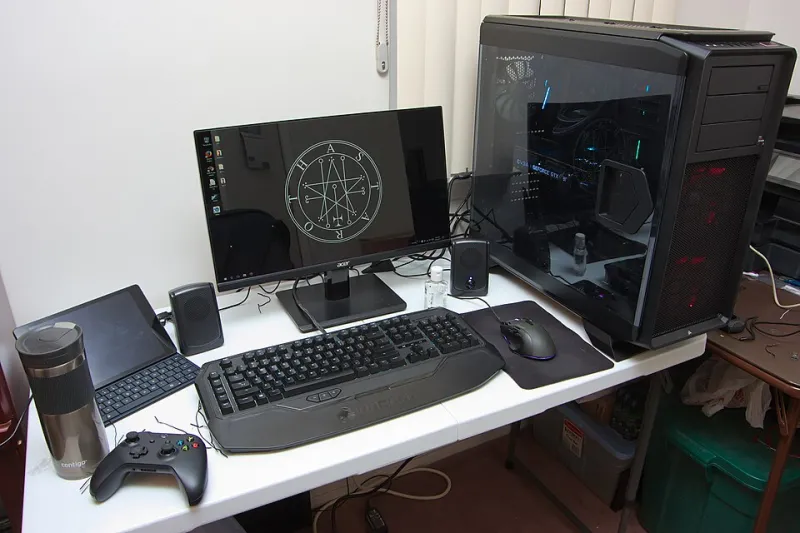
Photo: Brian Wong, CC BY-SA 2.0, via Wikimedia Commons
There's a particular kind of frustration that hits when a 70-billion-parameter model refuses to answer a question about, say, writing a villain's dialogue for your novel. You paid for the hardware. The model weights are sitting on your own SSD. And yet it's still acting like HR is watching.
The fix isn't a clever jailbreak — it's choosing models that were never caged in the first place. Here are seven open-weight options that run on consumer GPUs and give you the keys to the kingdom, along with the honest trade-offs nobody puts in the README.
1. Dolphin (based on Llama and Mistral)
Cognitive Computations' Dolphin series is the granddaddy of uncensored fine-tunes. Trained on curated datasets with refusals deliberately stripped out, Dolphin models are famous for following instructions without moralizing.
Hardware: The 8B variants run comfortably on a 12GB card; quantized versions squeeze into 8GB. Trade-off: With the safety training gone, output quality depends entirely on your prompting. Garbage system prompt, garbage behavior.
2. WizardLM Variants
Microsoft-adjacent research gave us the WizardLM lineage, and the community took the weights and ran. Fine-tunes of these models became early favorites for roleplay and creative writing precisely because they respond well to detailed system prompts — meaning you define the personality.
Hardware: 7B and 13B versions are the sweet spot for mid-range RTX cards. Trade-off: Older architecture. Newer models outclass them on reasoning, but veterans keep them around for tone and follow-through.
3. Abliterated Llama 3.x
"Abliteration" is the surgical option: instead of retraining, this technique identifies the direction in the model's activation space responsible for refusals and neutralizes it. The result is a model that keeps all of its original intelligence but simply... stops refusing.
Hardware: Llama 3.1 8B abliterated runs great in 8–12GB VRAM with Q4 or Q5 quantization. Trade-off: Abliteration can occasionally degrade coherence slightly — a small tax on the base model's smarts.
4. Mistral 7B (Base)
Sometimes the best uncensored model is the one that was never censored. Mistral's base weights shipped without an alignment-heavy fine-tune, and the community has built on them ever since.
Hardware: Runs on a potato with a graphics card. Q4 quantization fits in 6GB. Trade-off: Raw base models ramble without careful prompting. Pair it with a good fine-tune or a strong system prompt.
5. Abliterated Qwen 2.5
Qwen's 2.5 series punches way above its weight class on reasoning and coding, and abliterated versions are readily available on Hugging Face. For tinkerers who want brains and compliance, this is a top pick.
Hardware: The 14B variant needs roughly 10–12GB VRAM quantized; the 7B is easy mode. Trade-off: Qwen's tokenizer and formatting quirks occasionally trip up older tooling.
6. Nous Hermes Series
Hermes fine-tunes built a reputation as the thinking person's uncensored model — long-form coherent output, strong instruction following, and no built-in sermonizing. Later Hermes versions add function-calling and agentic capabilities, making them great for local automation projects.
Hardware: Hermes 3 8B runs well on consumer cards; quantize down if you're tight. Trade-off: Can be verbose. Reign it in with explicit length instructions in your system prompt.
7. Abliterated Gemma 2
Google's Gemma 2 is a genuinely strong small model, and the abliterated community versions unlock it fully. Excellent for creative writing and conversational use at small sizes.
Hardware: The 9B variant is happy in 8–10GB VRAM. Trade-off: Smaller context window than some rivals — keep sessions focused.
Getting Set Up Without the Headache
Skip the framework wars and start with Ollama or LM Studio — both make pulling a GGUF-quantized model a one-command affair. Grab your weights from Hugging Face (search "abliterated" plus the model name), match the quantization to your VRAM (Q4_K_M is the reliability/quality sweet spot), and write a system prompt that establishes your own rules. That last part is the real unlock: when you run local, you're the company writing the hidden instructions — except yours aren't a secret.
The Honest Fine Print
Uncensored means uncensored in both directions. These models will confidently produce wrong answers, edgy output, and everything in between, with no corporate filter catching the worst of it. Keep legal and safety considerations in mind, don't run anything sensitive on a model you don't understand, and treat the guardrails you remove as your own responsibility now.
For tinkerers, that's not a bug. That's the whole point.